Winter-Ready Sprinter Campers What Four-Season Really Takes
Plenty of vans get called four-season. Here's what the label should mean, how our Safari handles the cold, and what you still have to do in a freeze.
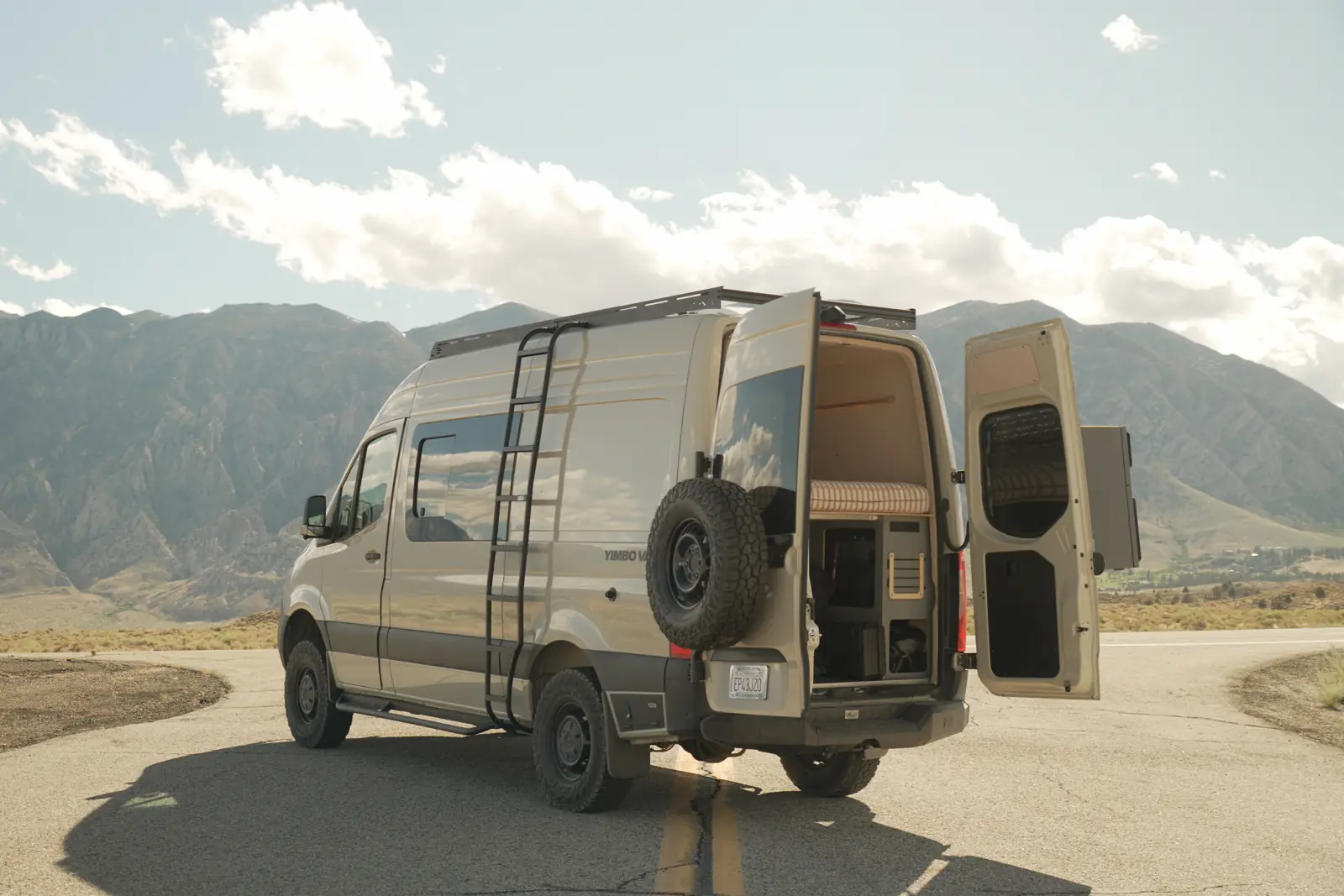
Staying Warm
Every Safari has 3M Thinsulate SM600L insulation and an Espar AS3 D2L diesel heater. The heater runs from the van's fuel tank, so you aren't refilling a separate tank or spending much battery to stay warm.
Insulation slows heat loss, but windows and the cab area still lose heat fastest. Insulated window covers make a noticeable difference on cold nights.
Controlling Moisture
Cold-weather vans get wet from the inside. Breath, cooking and damp gear all add moisture that ends up on the coldest surfaces.
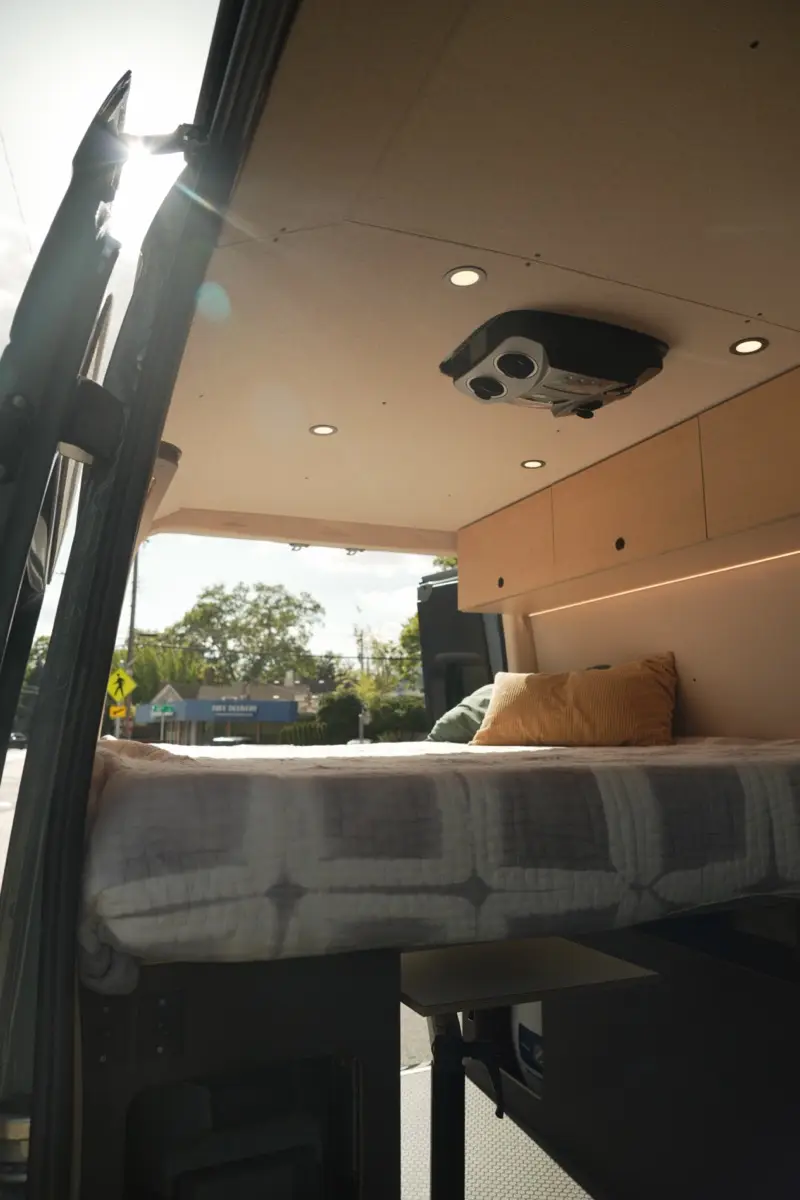
Two MaxxFan DLX fans move that moisture out. Crack a fan or window even when the heater is on. It uses a little more heat, but your gear will dry and your walls won't drip.
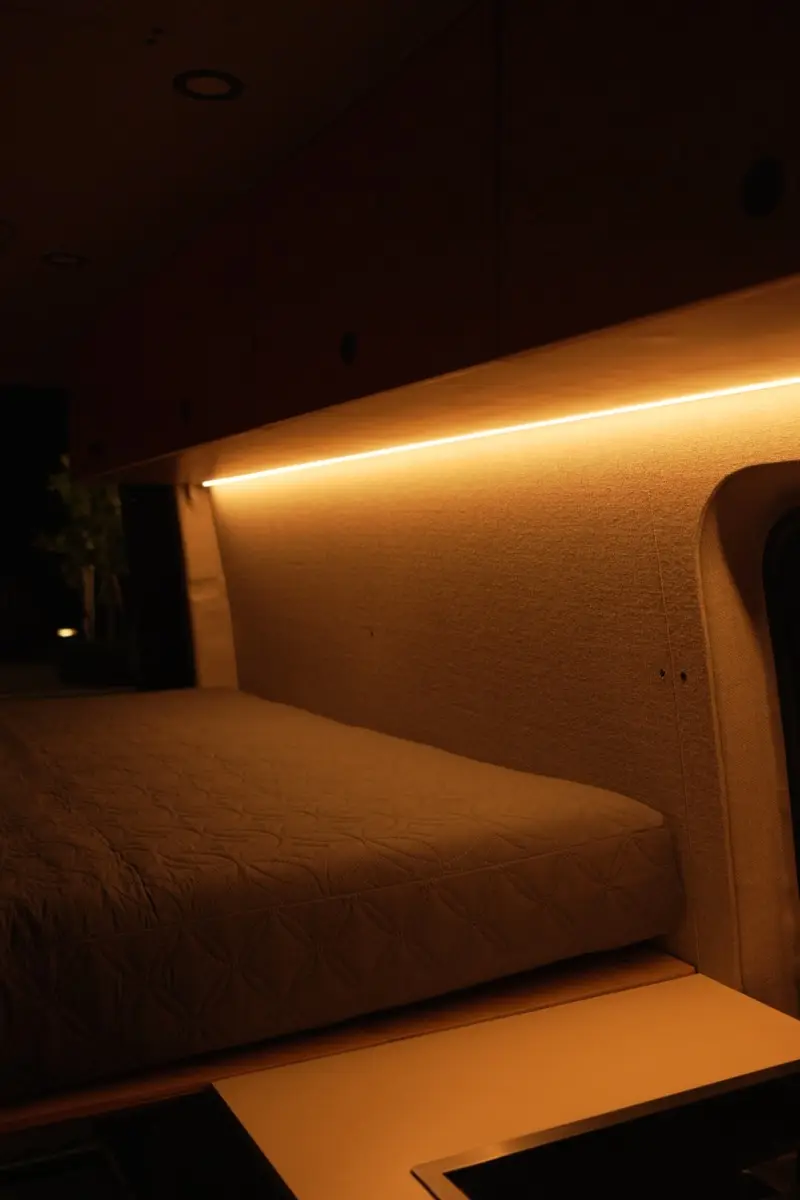
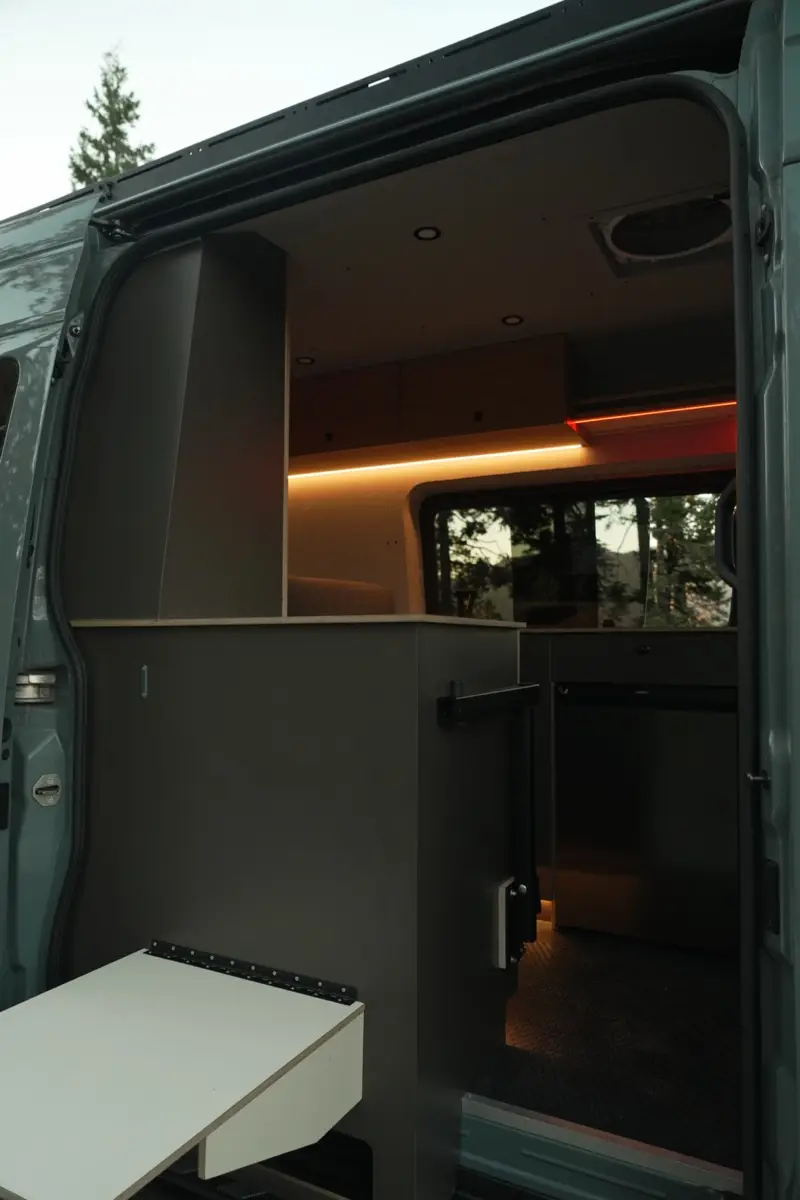
Insulated, heated and lit for cold nights

Power on Short Days
The Safari has a 5 kWh LFP battery, 400W of solar and a 1000W alternator charger. In winter, count on the alternator more than the roof. A few hours of driving between ski days can do what weak winter sun can't.
Lithium iron phosphate batteries generally shouldn't be charged below freezing, which is another reason to keep the van's interior warm. See how the power system works.
The Water System Is the Weak Point
We won't call any camper van freeze-proof. While you're in the van with the heat on, the system is much better protected. If the van is going to sit below freezing without heat, drain it.
We walk you through every system at handoff, so ask us to show you how to drain yours. Freeze damage from not draining the system isn't covered by the warranty, so learn this before your first cold trip.
Winter Trip Checklist
- Fill the diesel tank before heading into the cold
- Carry chains, and check Caltrans conditions before you go
- Start with a full battery
- Run a roof fan a little to manage moisture
- Clear snow from the solar panels and roof fans
- Drain the water system before leaving the van unheated
Good Fit, Poor Fit
A good fit: ski trips, cold-weather road trips and camping below freezing with the heater running.
Think it through first: long-term storage in a hard freeze or full-time living through extended subzero weather. Tell us how you'll use the van, and we'll be straight about what it can handle.
Common Questions
What makes a camper van four-season?
+
Insulation, a heater that can run all night, ventilation to control moisture, a power system that works with less sun, and a plan to protect the water system from freezing.
Will the water system freeze?
+
It can. Any water system can freeze if the van sits in freezing temperatures without heat. Drain it before leaving the van cold. Freeze damage from not draining the system isn't covered by our warranty.
Does the diesel heater use a lot of battery?
+
No. The Espar heater burns diesel from the van's fuel tank and uses a small amount of electricity to run.
Can solar keep up in winter?
+
Often not by itself. Shorter days, low sun and snow on the panels all cut production. Driving charges the battery through the 1000W alternator charger, and shore power is the third option.
Does a four-season van need AWD?
+
Not for the camping part, but AWD helps a lot on snowy roads. Carry chains either way, because chain controls can still apply.
Keep reading: Tahoe & Reno · Ski & Climbing Vans · AWD vs 2WD · The Safari
Build a Van for Cold Trips
Buildouts from $45k. 5–8 week turnaround. Full quote within 24 hours.